Understanding the Real Return on Investment (ROI) of Installing Egress Windows
By Joshua Harden | Acumen Renovations | General Contractors in Kansas City, Kansas
We’ve stood in a lot of Kansas City basements. Some are raw storage space with bare concrete walls. Some are half-finished with outdated carpet and a dropped ceiling. And some are nearly there, a bedroom, a bathroom, a family room, but missing the one thing that would make the space legally livable and genuinely safe. In almost every case, the conversation eventually comes around to egress windows.
At Acumen Renovations, your trusted home renovation contractor in Kansas City, we install egress windows regularly, and we’ve seen firsthand what they do and don’t do for a home. This guide covers the real ROI: the financial case, the safety case, and the practical realities of installation that most blogs don’t bother to mention.
What Is an Egress Window?
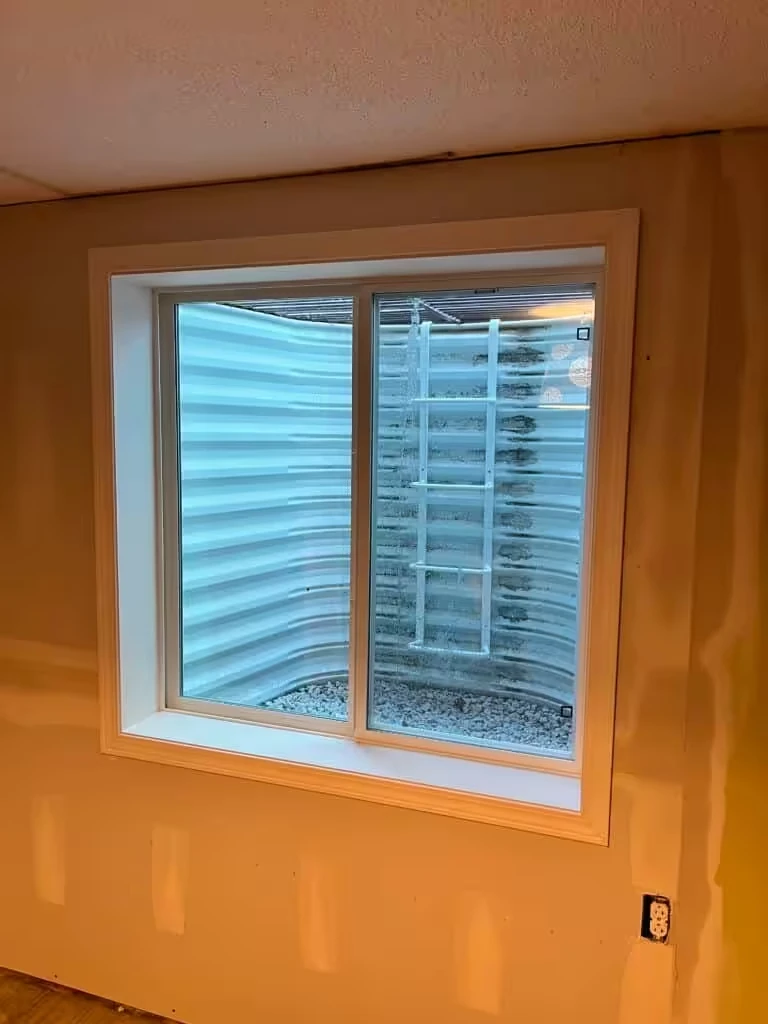
An egress window is a window designed to provide a safe emergency exit from a basement living space. Most building codes require egress windows in all basements with habitable space, and specifically in each basement sleeping room individually. To qualify, the window must meet minimum size requirements, including minimum dimensions for height, width, and net clear opening area, so that occupants can exit quickly and emergency responders can enter if needed.
The Case for Egress Windows: Four Real Benefits
1. Increased Home Value
When a basement includes a properly installed egress window, the space may qualify as legal living space, particularly if it includes a bedroom. Finished basements with legal bedrooms are significantly more attractive to buyers and can meaningfully influence resale value. Egress windows are one of the few home renovations where it’s realistic to fully recover the installation cost in added value, and in many cases exceed it.
For a broader look at which projects deliver the best returns, see our guide on 10 Exterior Renovations That Will Increase Your Home’s Value in Kansas.
2. Safety and Code Compliance
During a fire, stair access can be blocked within minutes. Egress windows provide a secondary exit route and allow emergency responders access to the basement from the exterior. Most municipalities require egress windows in every basement sleeping room, not just as a best practice, but as a legal requirement. A basement bedroom without one isn’t just unsafe; it’s non-compliant, and that will surface in any home inspection.
3. Increased Usable Living Space
Egress windows can transform a basement from storage into genuine living area: bedrooms, guest suites, home offices, family rooms, or rental spaces. More usable square footage improves both livability and marketability. That’s a real return that shows up whether you’re selling in two years or twenty.
4. Natural Light and Ventilation
Basements are often dark and poorly ventilated. A properly sized egress window allows meaningful natural light into the space and improves airflow, making a basement feel less like a utility room and more like a room. For many homeowners, this residential home improvement alone is worth the investment.
If you’re ready to talk through whether an egress window makes sense for your basement, contact the Acumen Renovations team. We’re happy to take a look at no cost.
What the Installation Actually Involves
Installing an egress window is a significant construction project. Here’s what homeowners should understand before they start.
Window Well Drainage
Because egress windows sit below ground level, water management is critical. Professional installations include either a drain connected to the home’s footing drain system or a gravel drainage base designed to move water away from the well. Without proper drainage, wells can fill during heavy Kansas City rains and eventually drive water into the basement. Drainage isn’t optional, it’s foundational to the install.
This same principle applies throughout your home’s exterior, as we explain in Caulk Is Not Flashing: Why Proper Water Management Matters for Your Home.
Window Well Ladders
Building codes require a permanently installed ladder or steps in any window well deeper than 44 inches. The ladder must not obstruct the window opening and must be usable in a genuine emergency.
Window Well Size: Beyond the Minimum
Code establishes a minimum well size, but minimum and optimal are two different things. At Acumen, we typically install wells at 50 inches wide with a 36-inch projection, sized to sit approximately 6 inches above grade. The difference in natural light and usability compared to a code-minimum well is significant. Homeowners who’ve experienced both rarely choose the minimum when given the option.
Window Well Covers
Many jurisdictions require covers to prevent accidental falls, reduce debris buildup, and limit water accumulation. Covers must still allow the window to open fully, the egress function cannot be restricted.
The Considerations Most Contractors Don’t Mention
This is where experience matters. The following are complications we encounter regularly in Kansas City homes, and that homeowners deserve to know about upfront.
Working Around a Pre-Finished Basement
Homeowners with already-finished basements face a different challenge than those starting from scratch. Cutting an egress opening in a finished space means disturbing existing drywall, framing, insulation, and potentially flooring, all of which need to be removed, worked around, and restored. This adds cost and complexity, and matching existing finishes after the fact is rarely a perfect outcome. Budget for some visible repair work and factor that into expectations before the project begins.
Cinder Block and Aging Masonry Walls
Not all foundation walls are the same. In many older Kansas City homes, the foundation is cinder block rather than poured concrete, and the condition of that block matters significantly when cutting an egress opening. Walls showing signs of bowing, cracking, efflorescence, or deteriorating mortar need careful evaluation before any cutting begins. In some cases, foundation repairs are needed before or during installation. A thorough assessment of the wall’s condition before committing to a location is always worth the time.
Buried Utilities and Exterior Excavation
Egress installation requires excavation along the exterior foundation wall, and what’s buried nearby is a serious consideration that’s routinely underestimated. Gas lines, water service lines, electrical conduit, and buried downspout drains commonly run close to foundation walls, particularly in older homes where utility routing wasn’t always well documented. Before any digging begins, utility locating services should be contacted (dial 811 in Kansas City). Private lines, gas running to a detached garage, irrigation systems, aren’t always included in standard locates and require separate attention. Choosing a window location without knowing what’s buried can turn a clean install into a significantly more complicated project.
The Mess Factor: What to Expect on Installation Day
Egress window installation is real construction, and homeowners should have realistic expectations about the disruption involved.
Inside, cutting through a concrete foundation wall requires wet cutting, a technique that uses water to control dust and cool the blade. That water has to go somewhere. Acumen takes precautions to protect the surrounding space, but some moisture and debris inside the basement is unavoidable. Clear the area out beforehand and plan for cleanup afterward.
Outside, excavation generates several cubic yards of displaced soil. If there’s an area on the property where that material can be spread, low spots in the yard, garden beds that could benefit from additional grade, or areas along the foundation where positive drainage slope is needed, that’s often a genuine win-win. The dirt stays on site, disposal costs are reduced, and the homeowner gets something useful out of it. When there’s no suitable spot, soil can be hauled off, though that does add to the overall project cost. Equipment access is also worth thinking through, a skid steer or mini excavator may need to pass through a gate or across a lawn, and that traffic will leave marks, particularly in wet conditions.
Neighboring Properties and Site Access
In Kansas City’s established neighborhoods, egress projects occasionally require a conversation with the neighbors, not typically because of boundary conflicts with the window itself, but because equipment and staging logistics sometimes mean briefly using a small section of an adjacent yard. Acumen’s practice in these situations is to get written consent from the neighbor before any equipment crosses their property line. It takes one extra step, but it protects everyone and keeps the project moving without friction.
Permits and Inspections
Egress window installation requires a permit, and homeowners should factor that into their planning from the start. Pulling a permit isn’t a formality, it ensures the work is inspected, documented, and on record for future resale. Acumen handles the permit process on your behalf, but permitting adds time to the overall timeline. Between scheduling, permit approval, and the follow-up inspection, this is not a same-week turnaround project. Planning a few weeks ahead of when you need the space finished is always the right approach.
Seasonal Timing
Egress installation can be done year-round, but season affects the experience. Winter installations present real challenges, wet cutting through concrete becomes difficult or impossible when temperatures drop too low, and scheduling around cold snaps requires flexibility. That said, winter has an advantage homeowners often overlook: lawns are dormant. Equipment traffic and soil staging that would leave significant ruts in spring or summer will largely recover on its own by the time the grass greens up. For homeowners who are protective of their landscaping, a winter install can be the smarter call. Spring and fall offer the most predictable working conditions, while summer is our busiest season, meaning lead times for scheduling are typically longer.
Have a project in mind? Reach out to the Acumen Renovations team to talk through timing and what to expect. As residential general contractors, we serve both sides of the Kansas City metro, Kansas City KS, Kansas City MO, and surrounding Johnson County municipalities.
A Kansas City-Specific Consideration: Radon
This one is worth its own section, because it comes up frequently in our market and most homeowners aren’t thinking about it.
Kansas City sits in what the EPA designates a Zone 1 radon area, meaning predicted average indoor radon levels exceed the EPA’s action level of 4 picocuries per liter. In practical terms, one in three homes in the Kansas City area tests above that threshold.
Radon is a colorless, odorless, radioactive gas produced by uranium decaying in soil. It seeps into homes through foundation cracks and gaps and concentrates in basements. Long-term exposure is the second leading cause of lung cancer in the United States.
Here’s where egress window installation intersects with radon in ways worth understanding:
Any time a foundation wall or slab is cut during egress installation, new penetrations are created. That’s a natural moment to test for radon if the homeowner hasn’t done so recently, and in Kansas City, it’s a test worth taking seriously.
If the home already has a radon mitigation system installed, the location of the new egress window matters. Radon mitigation systems vent through a pipe that exhausts above the roofline, and that exhaust point must be kept at a meaningful distance from any operable window. If an egress window ends up too close to an existing vent exhaust, radon pushed out by the mitigation system can re-enter through the open window, defeating the purpose of both systems. This is a coordination issue that most homeowners and many contractors don’t catch until it’s already a problem.
Acumen isn’t a radon mitigation contractor, and we’ll always recommend engaging a licensed radon professional for testing and system work. But we know enough to ask the right questions before a window location is finalized.
Installation Cost Factors
The ROI of egress windows is influenced by what installation actually costs, which varies based on: size and type of window, excavation requirements, foundation cutting, window well installation, drainage systems, and interior finishing work. Every home’s foundation and soil conditions are different, and installation complexity is the real cost driver. A straightforward install in a poured concrete wall on an open lot is a different project than a cinder block wall with a finished basement, buried utilities, and tight side-yard clearance.
If you’re comparing quotes from multiple contractors, our How to Compare Contractor Bids in Kansas City Series 1 and Series 2 are worth reading before you decide.
Energy Efficiency
Properly installed egress windows should not negatively affect a home’s energy efficiency. Modern windows are designed for strong insulation and air sealing. Choosing quality windows and ensuring proper installation are the key variables, this is not an area to cut corners.
The Bottom Line
In a market like Kansas City, where basements are common, additional living space is valuable, and the freeze-thaw cycle and heavy seasonal rainfall put real demands on foundation systems, egress window installation is about more than adding a window. It’s about integrating drainage, safety access, code compliance, and site-specific judgment into the foundation of your home.
The return on investment varies by project, but the combination of safety, usable living space, natural light, and improved home value consistently makes egress windows one of the highest-return residential home improvement projects a Kansas City homeowner can make. The key is doing it right, with the right assessment upfront, the right installation process, and a contractor who’s honest about what the project actually involves.
Acumen Renovations, trusted residential general contractors near you for Kansas City homeowners, specializes in egress window installation throughout the Kansas City metro, Kansas City KS, Kansas City MO, and surrounding communities. If you’re considering a basement project, we’d love to talk through your specific situation. Get in touch with our team to schedule a no-cost assessment.
Frequently Asked Questions
Do egress windows increase home value? Yes, egress windows allow a basement to qualify as legal living space, particularly when a bedroom is added, which can meaningfully improve resale value. They’re one of the few projects where full cost recovery is realistic.
Are egress windows required for basement bedrooms? Yes. Most building codes require a code-compliant egress window in every basement sleeping room. A basement bedroom without one isn’t just a safety issue, it’s a code violation that will be flagged in any home inspection.
Do window wells need ladders? In most jurisdictions, wells deeper than 44 inches require a permanently installed ladder or steps usable with the window in the open position.
Do egress window wells need covers? Many municipalities require them to prevent falls, debris, and water accumulation. Covers must still allow the window to open fully for emergency egress.
How much does egress window installation cost? It varies based on excavation, window size, foundation type and condition, drainage systems, and labor. Complexity, not the window itself, is the primary cost driver. Contact Acumen Renovations for an assessment specific to your home.
Do egress windows cause basement leaks? When properly installed with adequate drainage and window well protection, they shouldn’t. Most water issues trace back to drainage systems that weren’t installed correctly in the first place.
Should I test for radon before or after egress installation? If you haven’t tested recently and you’re in the Kansas City area, before is better, it gives you a baseline and informs whether radon needs to be part of the broader project conversation. If you have an existing mitigation system, tell your contractor before window locations are finalized. The Missouri Department of Health offers free radon test kits for residents at health.mo.gov.
Are you looking for local general contractors near me for egress window installation in Kansas City? Acumen Renovations serves Kansas City KS, Kansas City MO, and surrounding Johnson County communities. Reach out to schedule your no-cost assessment.
About the Author: Joshua Harden is the founder of Acumen Renovations, general contractors in Kansas City specializing in home renovations and residential home improvement projects. Over the past ten years, Acumen has completed hundreds of basement renovation projects across the Kansas City metro, including 150+ egress window installations. Joshua writes all content on AcumenRenovations.com from firsthand field experience, not templates. When he’s not on a job site, he’s probably answering the same questions you just read about.