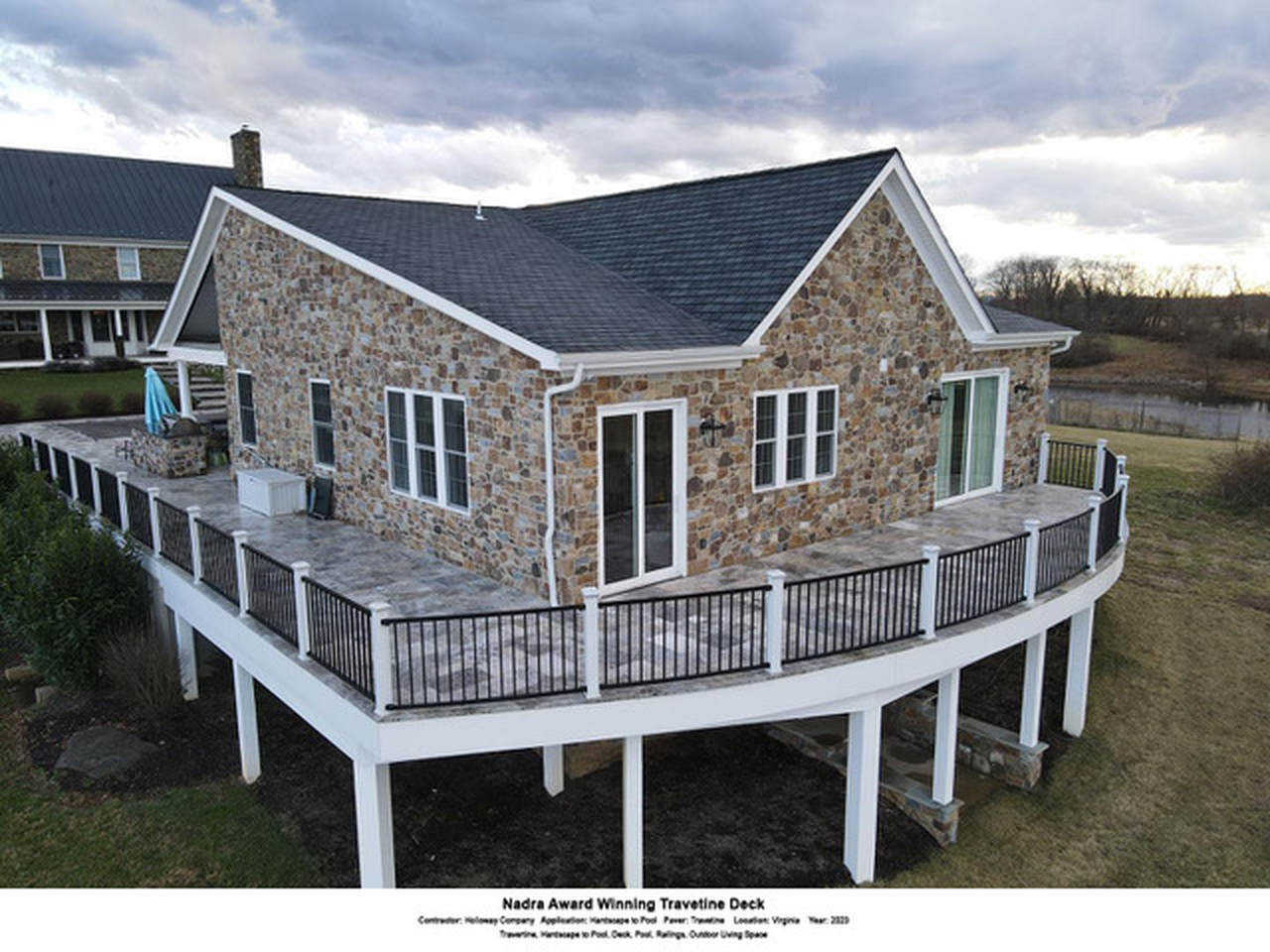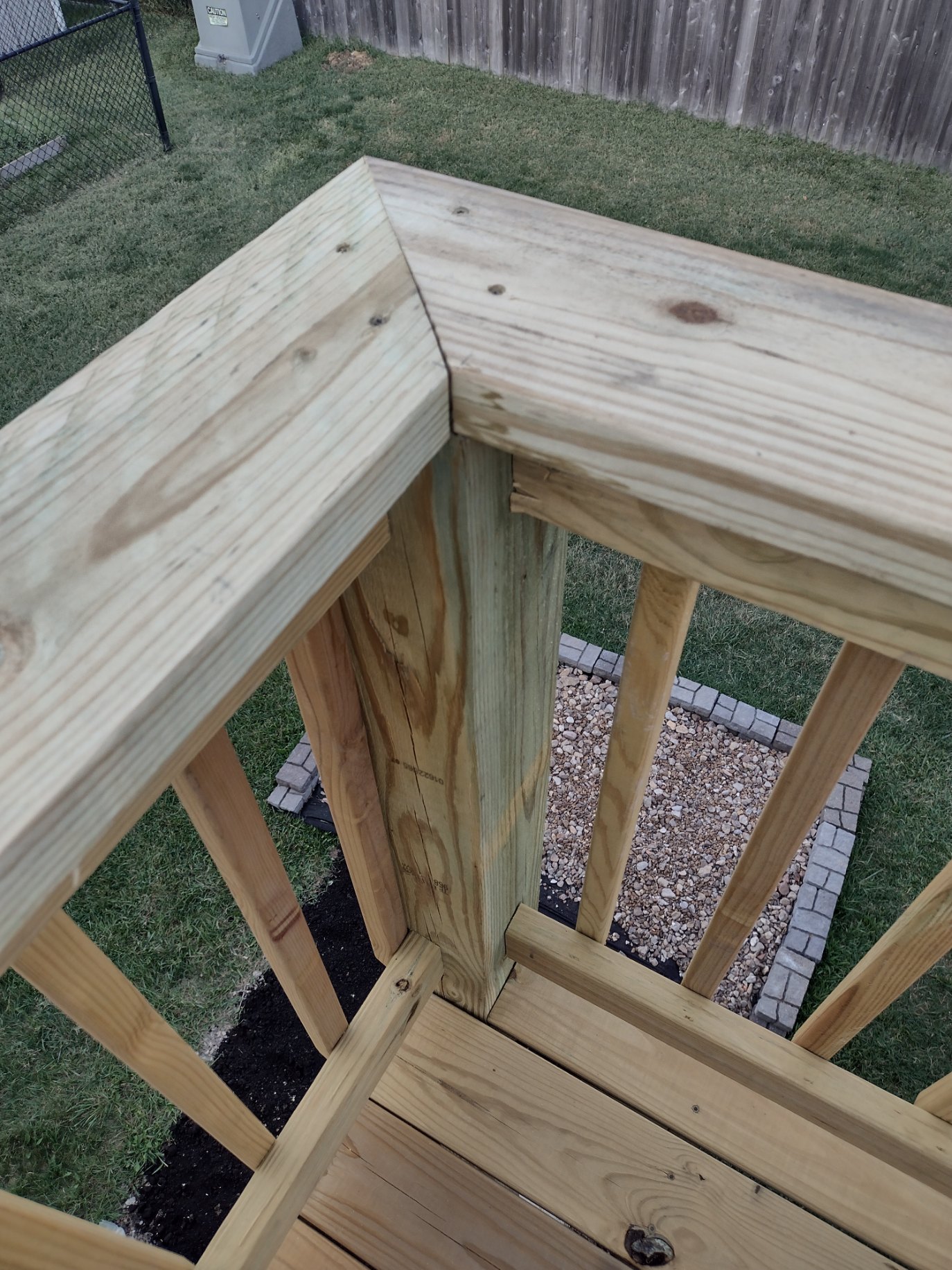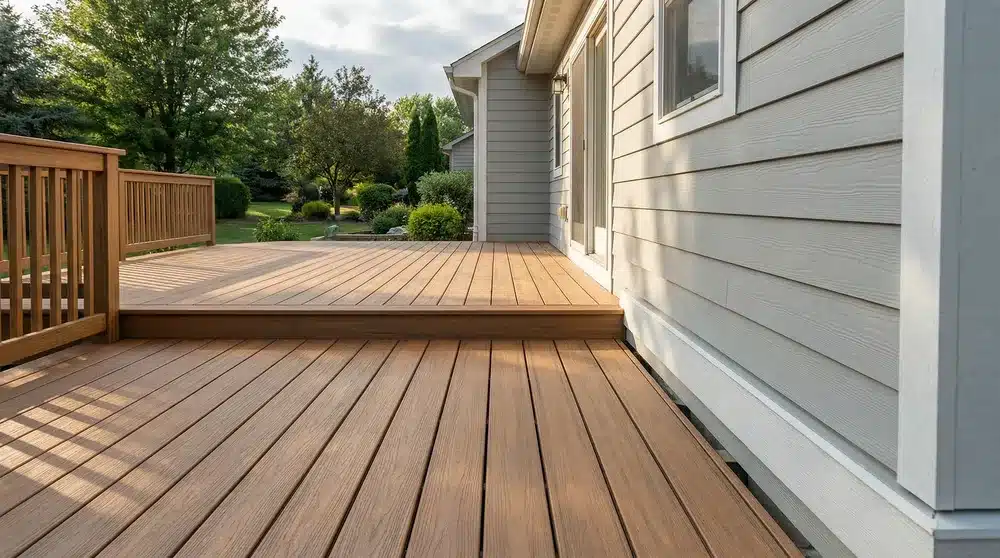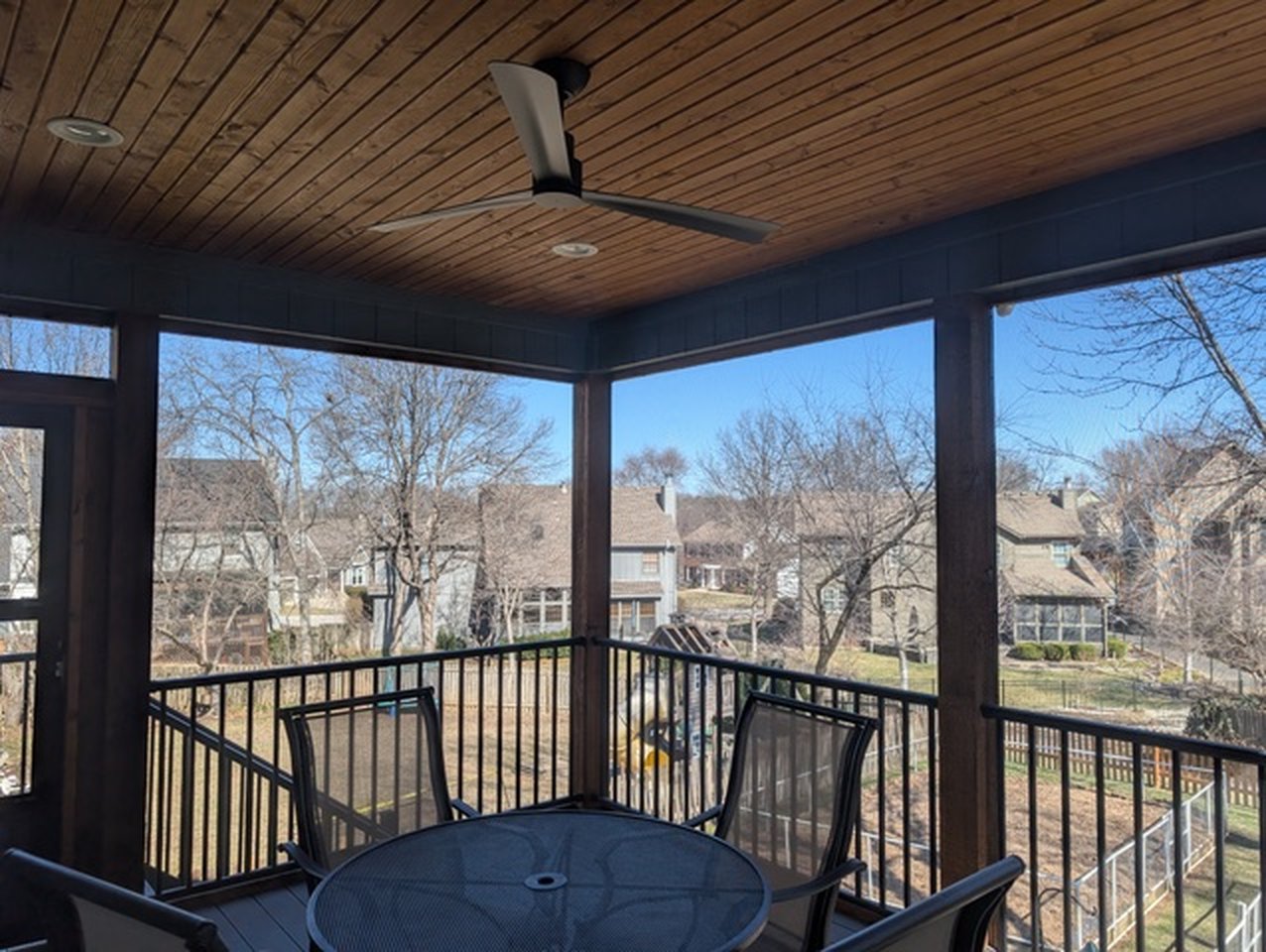
Cover photo: an Acumen outdoor-living project, shown as an example of a deck used through the colder season.
Most homeowners think deck-building season starts in spring. I don’t. After nearly 30 years in residential construction, I’ve found that late fall and winter can actually be one of the better times to build a deck in Kansas City. That doesn’t mean winter construction is easier in every way. Cold weather can slow concrete strength gain. Snow, ice, wind, rain followed by a freeze, or extreme cold can stop work. Pressure-treated lumber may need much longer before it is ready to stain.
But winter also gives us some advantages that homeowners usually don’t hear about. Pressure-treated lumber can dry more gradually in cool conditions. Firm, frozen ground may reduce equipment damage to a yard. Scheduling and permitting may offer more flexibility, and earlier purchasing can sometimes help manage material pricing. If your goal is to have a deck ready to use when spring arrives, waiting until spring to start planning may actually work against you.
The Short Answer: Yes, Winter Can Be a Very Good Time to Build
We build decks throughout the colder months when conditions allow us to do the work correctly and safely. Winter doesn’t change our construction standards. It changes how we plan the job. We account for:
- Cold-weather concrete
- Frozen or wet ground
- Snow and ice
- Manufacturer installation requirements
- Longer drying time for treated lumber
- Possible weather delays
- Shorter daylight hours and reduced crew productivity
Those are manageable conditions. And in several important ways, winter can work in the homeowner’s favor.
Pressure-Treated Lumber Can Benefit From Slower Winter Drying
This is probably one of the most overlooked advantages. Pressure-treated lumber can contain a considerable amount of moisture when it arrives at the jobsite. As that moisture leaves the wood, the lumber shrinks and changes dimension. That is when you can see cupping, twisting, warping, and checking. Moisture loss changes wood dimensions, and repeated wetting and drying can contribute to warping and checking.
From what I’ve seen in the field, winter can be better for wet pressure-treated lumber because it generally dries more slowly than it does during hot summer conditions. I would rather see that moisture leave the wood gradually. In my experience, slower winter drying can help reduce severe cupping, warping, and checking compared with rapid drying in hot, sunny conditions. That is a field observation, not a guarantee that winter-built lumber will move less. That doesn’t mean winter eliminates wood movement. It doesn’t.
The quality of the lumber, moisture content, framing layout, fastening, storage, and installation all still matter. But when I’m building a pressure-treated deck, I don’t consider slower winter drying a disadvantage. I consider it one of winter’s benefits.
The Trade-Off: A Winter-Built Wood Deck May Need Months Before Staining
The same slower drying that can help the lumber also creates an important trade-off. The deck may not be ready to stain for quite a while. For wet pressure-treated lumber, drying time depends on the lumber and the weather. Industry guidance recommends allowing wet treated wood to dry adequately before finishing and notes that the required time depends on the product and climate. Southern Pine
In our experience, a newly built pressure-treated deck may need anywhere from roughly one to six months before it is ready for stain. The finish manufacturer’s moisture limits and application temperatures still determine when staining can proceed; a calendar alone does not. That’s why we do not put staining in the same contract as the deck construction. We finish the deck. The deck contract gets completed and closed out. Then staining is handled separately when the lumber is actually ready to accept the finish.
I don’t want a completed construction project sitting open for months while everyone waits for moisture to leave the wood. More importantly, I don’t want to put stain on lumber simply because a contract says it is time. The wood decides when it is ready.
One of the Biggest Advantages: Your Yard Can Recover Before Spring
This may be the winter advantage homeowners appreciate most after the project is over. Building a deck requires access. We move lumber, tools, concrete, equipment, and materials through the yard. Acumen uses a mini excavator on projects where equipment is needed. Try doing that across a soft, wet lawn in spring and you can make a mess quickly. Frozen ground is different. When the ground is firm or frozen, we can often move equipment through the property with far less concern about rutting soft soil or tearing up active turf.
On my own Kansas City projects, surface frost has generally been manageable with our excavation equipment. That observation is not a frost-depth rule. Footing depth and bearing conditions must meet the requirements for the project and municipality. For us, that shallow frozen surface generally hasn’t created a meaningful excavation problem. The mini excavator gets through it. What it does do is give us a firmer surface to work from. Depending on the grass species and weather, turf may be dormant during much of the colder season.
There may be evidence of construction when we leave. But once temperatures rise, rain returns, and the lawn starts actively growing again, the property often recovers extremely well. Spring growth can help the yard recover, although drainage, soil conditions, turf type, access protection, and any needed restoration all affect the result. That is a real advantage.
Cold-Weather Concrete Requires Patience
Deck piers are a different story. Cold temperatures slow concrete strength development. That doesn’t mean concrete cannot be placed successfully in winter. It means it needs to be handled differently. NRMCA’s cold-weather guidance explains that concrete needs protection from freezing and time to gain adequate strength. Insulation and appropriate curing procedures help manage those conditions.
On our winter deck projects, we may use an appropriate accelerating admixture and protect new piers with insulated concrete blankets. Admixture selection must account for reinforcement and embedded metal; chloride-containing products are not appropriate in every situation. An accelerator does not replace proper curing or protection from freezing. The practical difference for the homeowner is time.
In our experience, winter piers sometimes need an extra day or two before loading. That is a scheduling observation, not a curing rule: loading must wait until the concrete has the strength required for the anticipated load and project requirements. We account for that. I would rather give concrete another day than build the schedule around what is most convenient for us.
Winter Weather Can Still Stop the Job
There are conditions where we stop. Snow and ice can make the site unsafe. Extreme cold can affect materials and concrete work. Rain followed by freezing temperatures can create unsafe footing and difficult working conditions. High winds can make certain operations unsafe. Sometimes the right decision is simply not to work that day. That is one of the trade-offs of winter construction.
We may lose productivity compared with a mild 60-degree day. Some work takes longer when crews are wearing winter gear, daylight is shorter, materials are cold, or we need additional cold-weather procedures. But we do not automatically charge a winter labor premium just because our productivity is lower. Winter is part of construction in Kansas City. We plan for it.
Composite Decking Can Still Be Installed in Cold Weather
Composite decking is not a warm-weather-only product. What matters is following the installation instructions for the specific material. Acumen installs Deckorators mineral-based composite on a large percentage of our composite projects. Its Surestone installation guide provides temperature-dependent gapping requirements. Low thermal movement does not remove the need to follow the exact product instructions. That’s how we approach it. We don’t invent our own cold-weather spacing rules.
We follow the manufacturer’s current requirements for the product being installed. That applies whether it is 25 degrees outside or 85.
Starting Early Can Help Protect Material Pricing
There is another winter advantage that has nothing to do with weather. Planning earlier gives us more control over purchasing. Many of the manufacturers and suppliers we work with traditionally announce annual price increases around January and February. That does not mean every product increases every year, and I would never promise a homeowner that material prices are guaranteed to go up on a particular date. But it happens often enough that it matters when planning a project.
At Acumen, once we have a signed contract, we lock in the material order with our supplier. So if we are able to finalize the design and selections before a supplier or manufacturer increase takes effect, we may be able to secure the project at the earlier material pricing. That is very different from saying, “Decks are cheaper in winter.” I don’t think that is an accurate way to explain it. The advantage is that earlier planning gives us more opportunity to manage material pricing before changes occur.
Winter Can Also Give Us Better Scheduling Flexibility
Spring is when everyone remembers they want a deck. As soon as temperatures start climbing, homeowners start calling contractors because they want the project finished before graduation parties, Memorial Day, summer cookouts, or family gatherings. By then, everybody is trying to accomplish the same thing at the same time. Winter can give us more flexibility. That doesn’t mean we promise immediate starts or artificially discount labor just to fill a calendar.
It means we generally have more room to plan the project properly before peak outdoor-construction demand arrives. And that matters because a deck has more decisions than most homeowners expect.
We work through the footprint, decking, subframing, railing, stairs, lighting, pergolas, privacy, fasteners, colors, drainage, access, and permitting. The earlier we start those conversations, the better we can manage expectations.
Permitting Can Sometimes Move More Efficiently Too
Deck permit requirements vary by municipality throughout the Kansas City metro. Acumen prepares the required permit-ready documents and handles permitting when the project requires it. Learn more about our new deck construction in Kansas City. From our experience, winter can sometimes mean less congestion at municipal permitting offices compared with peak construction season. I would not promise that every winter permit will be approved faster. Review times depend on the city, staffing, project complexity, and current workload.
But beginning the permitting process earlier gives everybody more breathing room. And that is really the theme of winter deck construction: more time to plan instead of trying to catch up.
What Winter Does Not Change
Whether we build in December or June, the basic requirements of the deck do not change. The ledger still has to be attached and flashed correctly. The framing still has to carry the loads. The posts and piers still have to be correct. The railing still has to be safe. The decking still has to be installed to the manufacturer’s requirements. And water still has to be managed.
For more on long-term performance, read about deck lifespan in Kansas City and our Deck Framing Options in Kansas City. Moisture management and the structure beneath the boards matter in every season. The season you build in matters less than whether the contractor understands how the entire system needs to perform after the job is finished.
So, Should You Build Your Deck in Winter?
If you want the deck ready for spring, I would seriously consider it. Winter gives us some meaningful advantages:
- Pressure-treated lumber can dry more gradually.
- Frozen ground can reduce damage from equipment access.
- Dormant turf has time to recover before the growing season.
- Scheduling can be easier to manage.
- Permitting may encounter less seasonal congestion.
- Starting before annual manufacturer increases may help protect material pricing.
- Earlier construction can put you in a better position to enjoy the deck in spring, subject to weather, permits, and the agreed schedule.
The trade-offs are real too:
- Weather can interrupt the schedule.
- Concrete piers may need extra time before loading.
- Crews are sometimes less productive in cold conditions.
- Pressure-treated lumber can take considerably longer before it is ready for stain.
- Every product still has to be installed according to its cold-weather requirements.
None of those are reasons I would automatically wait until spring. They are reasons to plan the project correctly.
Frequently Asked Questions About Winter Deck Building
Can you build a deck during winter in Kansas City?
Yes. We build decks during winter when site and weather conditions allow the work to be performed correctly and safely. Cold weather changes some construction procedures and scheduling, but it does not automatically prevent deck construction.
Is winter better for pressure-treated lumber?
In my experience, cooler conditions can allow wet pressure-treated lumber to dry more gradually. I prefer that slower cycle, but wood movement still depends on the lumber, moisture, storage, fastening, and installation. Winter does not guarantee less warping.
How long before a winter-built pressure-treated deck can be stained?
In our experience, roughly one to six months may be needed, depending on the lumber and weather. The selected finish’s moisture and temperature requirements determine readiness. Acumen handles staining separately from the deck construction contract.
Can deck piers be poured during winter?
Yes, when proper cold-weather concrete procedures are followed. The concrete may require accelerators when appropriate, insulation or blankets, freeze protection, and additional time to reach the strength needed before structural loading. NRMCA
Can composite decking be installed below freezing?
Some composite products can be installed in cold weather, but the manufacturer’s installation instructions need to be followed. Deckorators provides different gapping requirements based on installation temperature, including requirements for temperatures below 32°F.
Will construction ruin my lawn during winter?
Construction can disturb a yard. Firm, frozen ground may reduce rutting compared with soft, wet soil, but thawing ground and site conditions can still cause damage. Spring recovery and any restoration needs vary.
Is building a deck in winter cheaper?
Not automatically. We do not reduce the quality of the work or promise seasonal discounts. The financial advantage can come from planning early enough to lock in material orders before supplier or manufacturer price increases take effect.
When should I start planning a deck for next spring?
As early as possible. Starting in fall or winter gives us more time to work through design, materials, permits, purchasing, access, and scheduling before peak spring demand arrives.
Plan Your Deck Before Spring
Winter is not the season when deck construction has to stop. In some respects, it is one of my favorite times to build. I like the slower drying cycle of treated lumber. I like moving equipment across firm ground instead of tearing up a wet spring lawn. I like giving homeowners time to work through decisions without rushing toward a summer deadline. And I like finishing a deck before the homeowner actually wants to start living on it.
There are challenges. We manage concrete differently. We watch the weather. We allow more time when conditions require it. And if pressure-treated lumber needs several months before stain, we wait until the wood is ready instead of forcing the schedule. That is the difference between asking, “Can you build a deck in winter?” and asking the better question: “Does the contractor know how to build one correctly in winter?” If you are considering a new deck, you can start planning before spring arrives.