Can a privacy screen be used as a deck railing?
Only if it's a tested guardrail system. Most privacy screens are decorative. If the screen is standing where fall protection is required, it has to be rated as a guard, or it has to sit behind a railing that is.
Is the Deckorators privacy screen code compliant as a railing?
No. Deckorators says its panels are for aesthetic purposes only and haven't been tested or approved as a guardrail. It's a good product anywhere a guard isn't required.
Is the TimberTech Impression Privacy Screen code compliant?
TimberTech rates it for guard use at 36" and 42" railing heights under code report ESR 4217, and up to 72" tall when the Modern Top Rail is installed at railing height.
When does a privacy screen need to meet guardrail code?
When it's standing along an edge more than 30 inches above the grade below. At that point it's the guard, and it has to meet guard requirements.
Why do rated screens cost more?
Because it's a railing system that also blocks a view, not a view-blocker. On one of our jobs, the rated system cost about double.
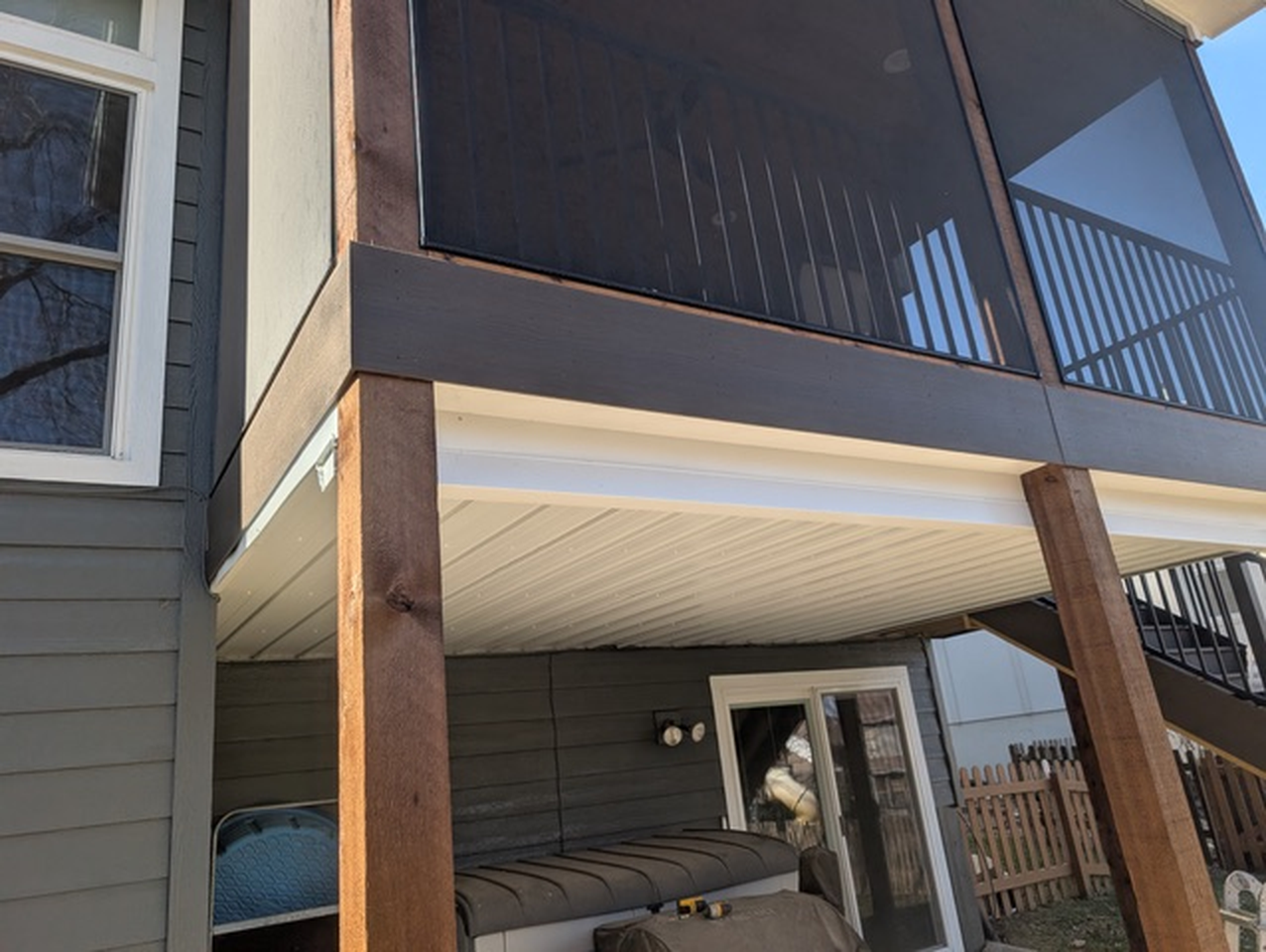
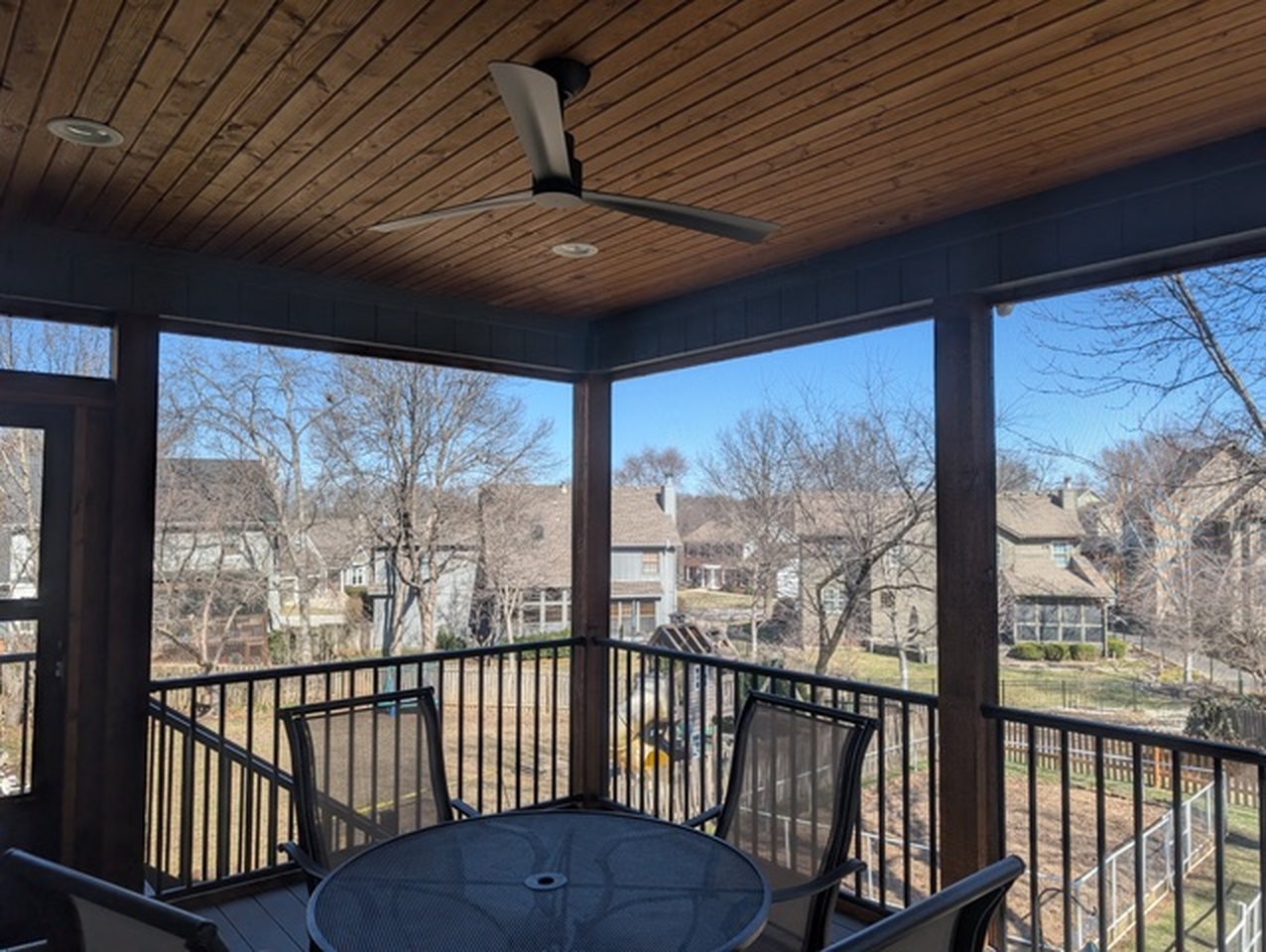
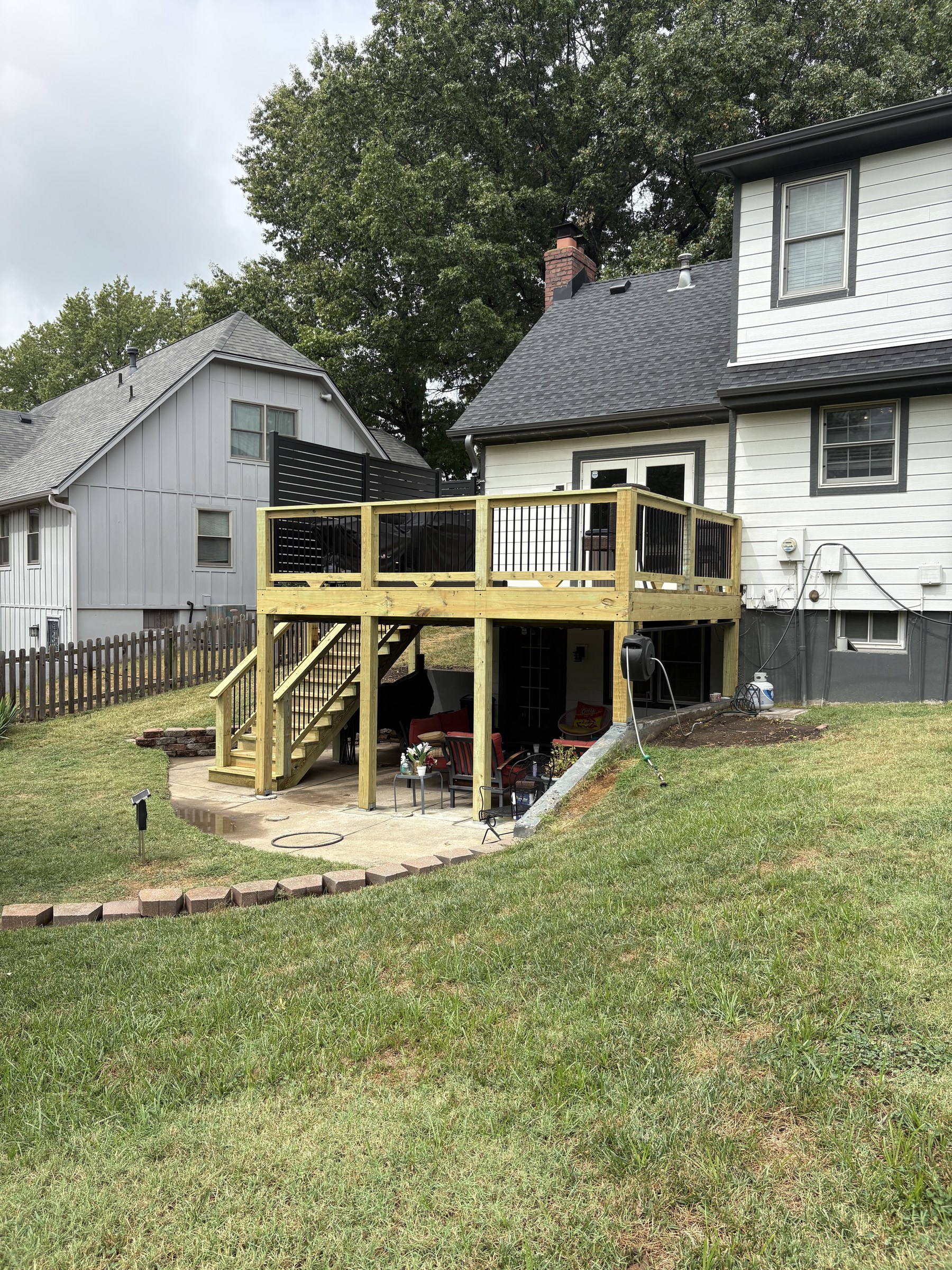
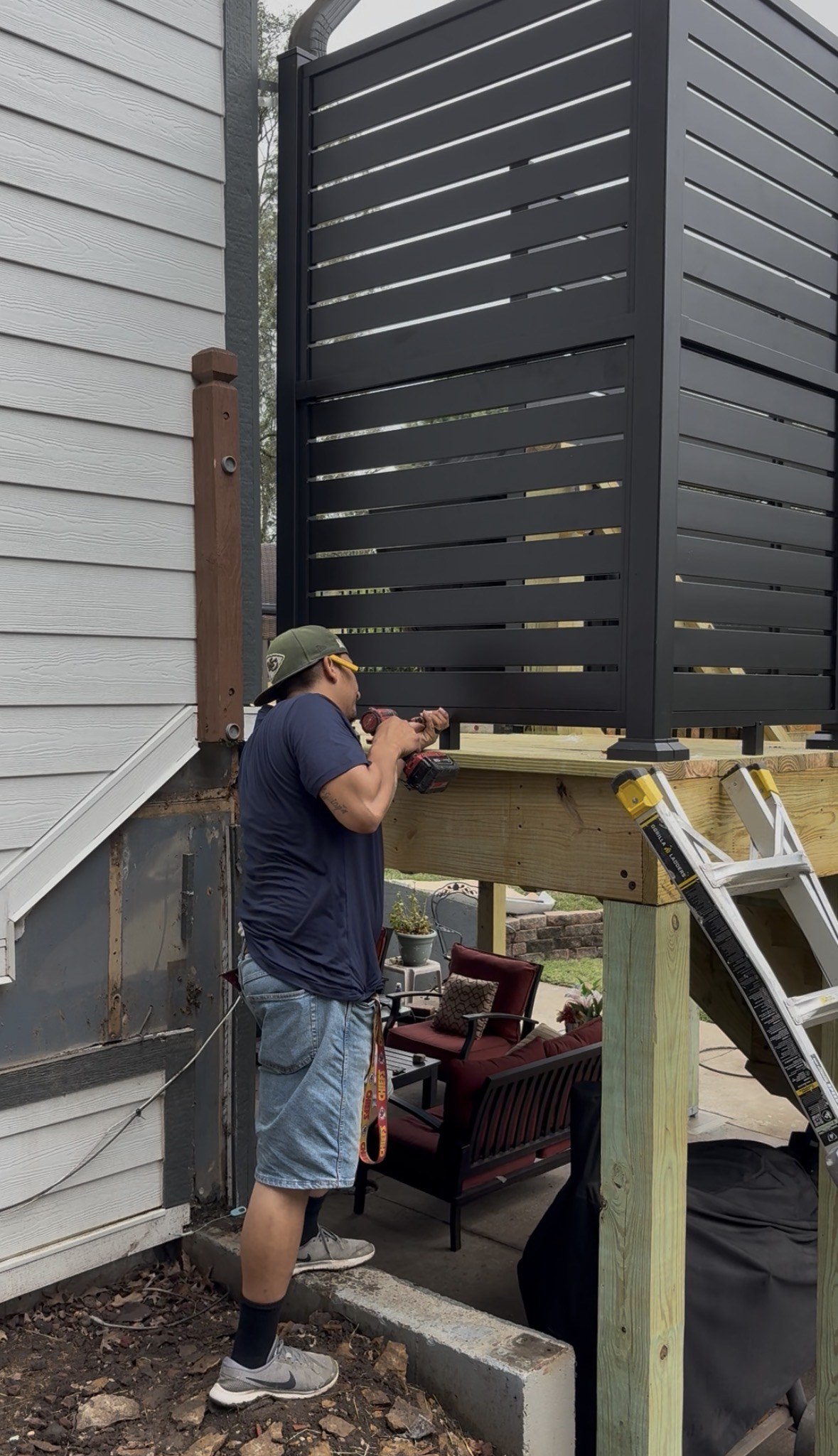
Earlier this year we sold a deck replacement in Lee's Summit. New treated deck, an under-deck roofing system to make the space below usable, and a privacy screen along one side. I spec'd the Deckorators Privacy Screen System, because Deckorators is my go-to and I'm a certified installer for their products. The homeowner signed. Job sold.
When I went to order it, my sales rep asked one question: is the deck elevated? It was. Then he told me something I didn't know: most privacy screens on the market aren't compliant to be used in place of a railing. That screen was going to stand at the edge of an elevated deck, right where the code requires a guard. And Deckorators says it plainly on their own product page: the panels are designed for aesthetic purposes only and have not been tested or approved as a guardrail system.
So the screen I'd sold couldn't legally do the job it was going to be doing. The system that could, TimberTech's Impression Privacy Screen, is backed by a published code report for guard use. It also cost about double.
The job was already sold. I ate the difference, like a late-night snack. The homeowner got the rated system at the price they signed for, and I got an expensive lesson I'm now passing along for free: privacy screens are not all the same product, and they don't all do the same job.
Two Products That Look the Same and Do Different Jobs
Stand ten feet back and a decorative privacy screen and a rated privacy screen look like the same thing: aluminum posts, a frame, slats or panels. The difference is what each one was built and tested to do.
A decorative screen blocks a view. That's its whole job. It needs to stand up, look good, and survive the weather. Nobody tested it to stop a 200-pound person from going over the edge.
A rated screen is a railing first. It's a guardrail system that's been tested and documented to meet code as fall protection, and it happens to block a view too. That's what you're paying for when the price doubles.
Here's how the two systems from my story compare, using what each manufacturer publishes:
| Deckorators Privacy Screen System | TimberTech Impression Privacy Screen | |
|---|---|---|
| Rated as a guard? | No. Manufacturer states it's for aesthetic purposes only and not tested or approved as a guardrail. | Yes. Code rated for guard use at 36" and 42" railing heights per code report ESR 4217. |
| Max height as a guard | Not applicable | Up to 72" when the Modern Top Rail is installed at railing height |
| Where it belongs | Anywhere a guard isn't required: patios, under-deck spaces, low decks | Anywhere the screen is the fall protection |
| Cost on our job | Baseline | Roughly double |
Neither one is a bad product. They're different products. The mistake is putting the decorative one where the rated one belongs, and that mistake is easy to make, because the photos look identical.
When Your Privacy Screen Becomes a Guardrail
This is the part most homeowners, and plenty of contractors, never think about. A privacy screen doesn't get to decide whether it's a railing. Its location decides.
- The 30-inch trigger. Under the International Residential Code, which Kansas City-area cities adopt in some edition, a guard is required anywhere the walking surface is more than 30 inches above the grade below. If your screen is standing along that edge, it's the guard. Period.
- The 200-pound load. A guard has to resist a 200-pound concentrated load applied at the top, in any direction. That's the code's stand-in for a grown adult leaning, falling, or getting shoved into it. A decorative screen hasn't been tested against that.
- The infill rules still apply. If the screen is the guard, the panels or slats are guard infill. That means the 4-inch sphere rule for openings and the infill load requirement come along for the ride. Gaps between slats that look fine for privacy can fail as guard openings.
- "Rated" means rated as installed. A code report covers the system installed the way the report describes: the posts, the spans, the top rail, the mounting. TimberTech's rating to 72" depends on the Modern Top Rail being installed at railing height. Leave it off, or swap in different posts, and you're back to an untested assembly.
- Height adds wind. A 6-foot screen catches a lot more wind than a 36-inch railing, and that force all ends up at the posts and their connection to the deck. This is one reason a tested system matters. TimberTech states the Impression Privacy Screen has been wind-load tested. Whatever system you use, the post attachment has to be built for it. We cover how deck railing posts fail, and what proper blocking looks like, in What We Find When We Tear a Deck Railing Apart.
My Honest Take
Deckorators is still my go-to, including their privacy screen. I'd put it on a patio under a deck tomorrow. Anywhere the screen isn't being asked to keep someone from falling, it's a good product at a fair price.
But I'm not going to pretend I didn't learn something here. I sold a job on the wrong product for the location, and the only reason it didn't become the homeowner's problem is that a good sales rep asked the right question before anything was installed, and I paid for the fix. A lot of screens going up right now were never checked. They get built because the photo looked good, and nobody asked whether the thing standing at the edge of the deck was ever meant to stand there.
That's why we changed how we handle it. Now the first question on any privacy screen isn't style or color. It's whether this screen needs to meet guard code. Once we know that, we talk options. If it does, we price rated systems. If it doesn't, the decorative options open up and the budget goes a lot further.
What to Ask Before You Sign
- "Is this screen the guard?" If the deck is more than 30 inches off the ground where the screen stands, the answer is yes. Make your contractor say it out loud.
- "What's the code report number?" A rated system has one, like TimberTech's ESR 4217 for the Impression Privacy Screen. If the answer is a shrug, the screen probably isn't rated.
- "Is it being installed exactly per that report?" Posts, spans, top rail, mounting. A rated product installed off-spec isn't rated anymore.
- "Can I see both prices?" If guard compliance isn't required, a decorative screen can save real money. If it is required, you want to know what the rated system costs before you fall in love with a photo.
- "Does the screen height need HOA or city approval?" A 6-foot screen on a deck can raise height, setback, or design-review questions separate from the guard rules. Ask before the design is final.
If you're comparing bids that include a privacy screen, line up whether each contractor treated it as a guard. Two bids that look far apart on the screen line might be quoting two different products. Our guide on how to compare contractor bids in Kansas City walks through how to spot scope differences like this one. And if you want to understand why who installs a rated product matters as much as the product itself, read why contractor certifications matter for your home warranty.
Acumen Renovations builds decks, railings, and privacy screens across the Kansas City metro, and we figure out whether your screen has to be a guard before we talk about what it looks like.
If you're planning a privacy screen and want to know which kind your deck actually needs, we're happy to have that conversation. Reach out here.